

Best practice for small operators is not marketing a fragile product
For small manufacturers with limited capital, the dominant risk is not low awareness. It is allocating
scarce resources to market a product that is structurally fragile. Marketing does not repair
formulation weakness, stability drift, or design flaws. It only increases exposure to failure. The
rational allocation of limited capital is to build a product that performs reliably in the real world
first. Marketing exists to communicate a product’s value once the product can survive distribution,
storage, and consumer use without degrading.
Stability is broader than microbial safety
Stability failure is often misinterpreted as microbial failure alone. In practice, products lose shelf
position due to physical and sensory instability: colour change, phase separation in sauces and
beverages, oil-water separation, sedimentation, textural collapse in baked goods, staling, moisture
migration, and flavour drift over time. These failure modes degrade acceptability before any
microbiological limit is breached. Shelf space is lost on perceived quality and consistency, not on
laboratory compliance alone.
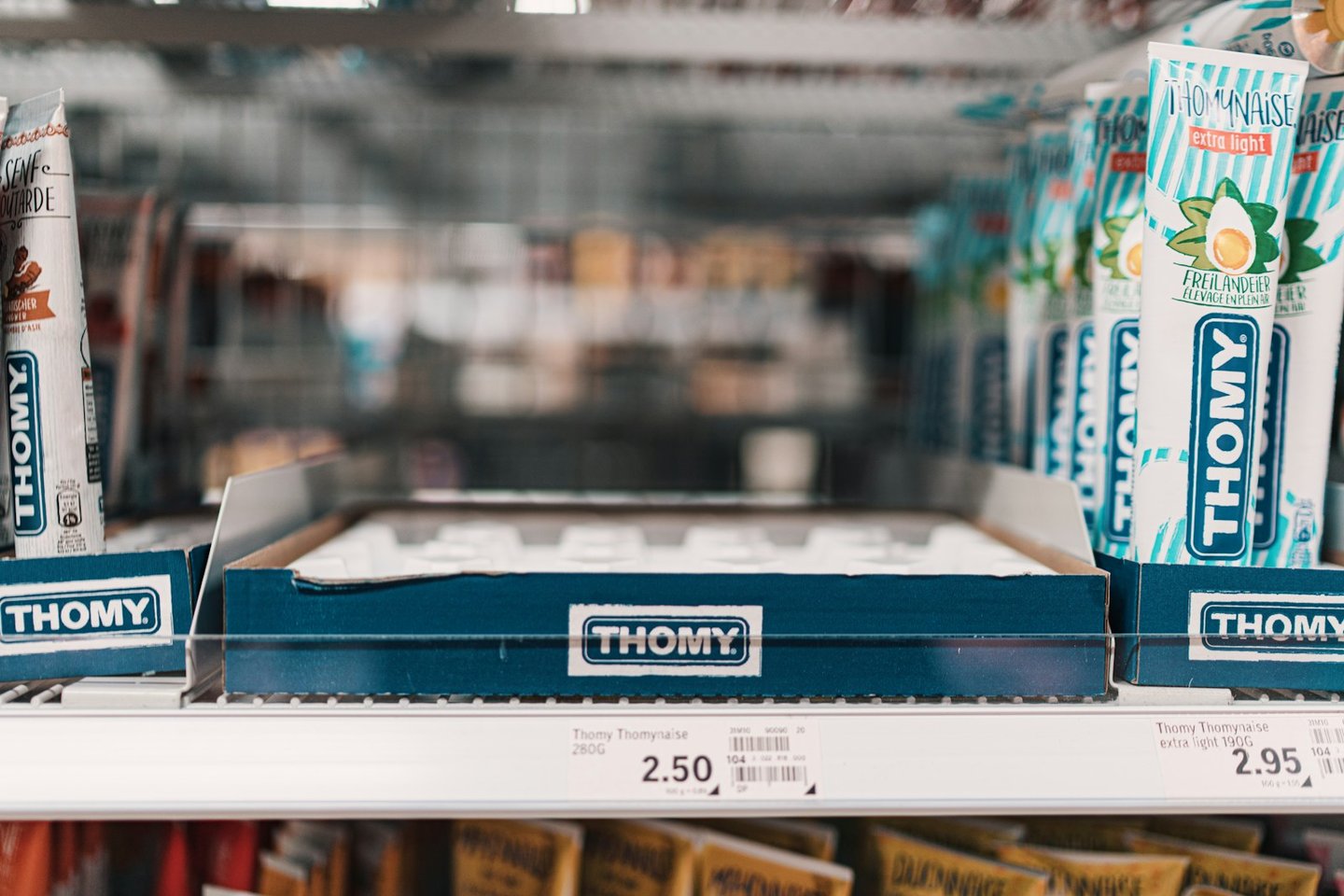
Retail shelves are governed by operational risk, not intention
Retailers allocate shelf space based on operational reliability: returns, complaint load, audit
exposure, and handling stability. Products that introduce variability into store operations, logistics,
or quality control are treated as risk units. Reallocation is administrative. It does not require
confrontation or feedback. The product is replaced by one that behaves more predictably under real
conditions.
Instability creates free market intelligence for competitors
Unstable products generate visible data: sales velocity, consumer complaints, failure modes, and
category demand signals. Distributors and adjacent operators observe these signals. A concept that
demonstrates demand but fails on stability provides competitors with a low-cost learning platform.
They inherit the market insight while correcting the formulation weaknesses. In effect, the original
product becomes a prototype for someone else’s more robust version.
Where irreversibility enters
Irreversibility begins when buyers internalise the product as operationally unreliable and when
competitors internalise the product as commercially viable but technically flawed. Once these two
learning loops occur, shelf space is no longer defended by originality. It is defended by reliability.
Even if the original product later improves, the shelf slot has already been rationalised around
alternatives that behave more predictably.
Why releasing a fragile product accelerates displacement
Launching before stability is resolved accelerates competitive learning. The market observes not
only the opportunity but also the weaknesses. Retailers experience the cost of inconsistency.
Distributors learn where failures occur. This shortens the time required for substitutes to emerge.
The original brand bears the learning cost while others benefit from the information asymmetry.
Why fixing first protects against copycats
Products that demonstrate stable flavour, texture, and physical performance across seasons, storage
conditions, and distribution stress are harder to copy quickly. The technical learning curve becomes
steeper. Competitors must replicate not only the concept but also the formulation resilience and
process control. This increases time-to-imitation and preserves shelf position longer. Fixing stability
first does not eliminate competition. It delays and raises the cost of replication.
Why stability fixes preserve optionality but do not remove the need to progress
Stability is a precondition, not an endpoint. A stable product preserves shelf position and channel
trust. It does not eliminate competitive pressure. Once stability is achieved, complacency becomes
the next risk. The system must continue to evolve at a higher level of robustness. Stability buys time
and optionality. It does not buy immunity.